Explainer
What Size Power Station Do I Need? (SA, 2026)
Work out the power station size you need from your own appliance labels: battery, output and surge, for load reduction or a long power cut.

The number on the box is how most power stations are bought, and it is the wrong number to look at. A 1 024Wh unit sounds like enough until the fridge will not start on it, or until the evening power cut outlasts it by an hour.
But don't worry, in this article I will help you look out for the real numbers and understand how they affect the actual size and capacity of the unit you need.
There are actually three numbers that decide the size of the power station you buy, and all three are printed somewhere you can check: the watts on your appliances' labels, the hours of your longest power cut, and the Surge ratingThe most power a power station can deliver for a moment, above its continuous output, to start appliances that draw a burst of power when they switch on, such as fridges and pumps. If the burst is bigger than the surge rating, the unit cuts out.In this guideThe EcoFlow DELTA 3 Plus gives 3 600W of surge on a 1 024Wh battery, the real surge headroom this guide recommends once a fridge is on the list. of the unit.
If you are researching to buy, I will walk through each one using power stations sold in South Africa by EcoFlow and Gizzu, the examples we recommend, so every number matches something you can buy today. And as a bonus, there is a calculator below that does the division with your own appliances, so you don't have to work it out yourself.
The three numbers that decide the size
Work them out in this order. Each one rules out units the one before it let through.
Add up the watts
Every appliance has a rating label with a number followed by W. Add up the ones you want running at the same time. If a power adapter only shows volts and amps, multiply the two to get watts.
Multiply by your longest power cut
Total watts times hours gives the watt-hours you need. A 150W load for a five-hour evening power cut needs 750Wh on paper, so buy a battery comfortably bigger than that, because some energy is always lost turning the battery into mains power.
Check the output and the surge
The unit's continuous output must be higher than your total watts, or it switches off. A fridge or freezer also draws a short burst when its motor starts, which is what the surge rating is for.
Battery size decides how long. Output decides whether it runs at all. Surge decides whether the fridge starts.
Work it out with your own appliances
Go round the house with your phone torch and read the labels first. The calculator does not fill in any watts for you, because a router or a TV can use very different amounts depending on the model, and a guessed number would give you a confident wrong answer.
Interactive toolType your watts, pick a power station, and the answer changes as you go.
1Your appliances' watts
Type the watts printed on each appliance's rating label (look for a number followed by W). Leave a row empty to skip it.
- Rating plate inside the door or on the back
- Rating plate on the back or side
- On the power adapter: volts times amps if no W is printed
- On the back of the set
- On the charger
- Add up the watts printed on each bulb
2Pick a power station
The hours are the battery size on the label divided by your total watts. Some energy is lost turning the battery into mains power, and none of these makers publishes how much, so real runtime is shorter. Specs are each maker's own; prices are the lowest in-stock offer we read.
On the EcoFlow RIVER 2 Max
At most Add your watts
Type the watts for what you want to keep on.
A fridge or freezer draws a burst of power to start.
Read the hours as the most you can get, not what you will get. The calculator also treats a fridge as if it runs flat out the whole time, which it does not, so for a fridge the answer sits somewhere between the two. The EcoFlow DELTA 3 Max is on the list, but EcoFlow does not give its surge rating, so for that one unit the calculator cannot tell you whether a fridge will start.
The number on the box is not what you get
The watt-hours on the box are the size of the battery cells. To power your appliances the unit turns that stored energy into mains power, and some of it is lost as heat on the way. None of the makers on our list says how much. EcoFlow, Gizzu and Jackery's South African stores all give the cell size and stop there.
Gizzu is the only one that says anything about it: in UPS mode, sitting plugged in on standby, its Hero units hold the battery between 90% and 100% to protect it. So if you leave a Gizzu permanently plugged in as a UPS, plan as if a tenth of the battery might already be gone when the power cuts.
Watt-hours divided by rated watts is the best case, not the answer
A calculation like 1 024Wh divided by a 150W fridge assumes the unit delivers every watt-hour on its label and that the fridge draws its full rating all the time. Neither is true, and they are wrong in opposite directions: losses make the real runtime shorter, and a cycling fridge makes it longer. Use the division to compare units, and buy with headroom.
Will it run the fridge?
The fridge is the appliance that decides most of these purchases, and it breaks the simple arithmetic twice.
First, a fridge does not run all the time. Its thermostat switches the motor on and off, and Eskom's own home energy calculator assumes a fridge uses electricity for about 3 hours a day. So its rated watts overstate what it draws across an evening power cut.
Second, when the motor does start, it draws a burst of power well above its running watts for a moment. If that burst is bigger than the unit's surge rating, the unit cuts out and the fridge never starts, however big the battery is. The starting figure is not always on the rating plate, and the fridge's manual is where it is printed when it is. Here is what each unit allows.
Continuous output is what it can run. Surge is the short burst it can give a motor starting up.
Output and surge, from each maker
| Battery | Continuous output | Surge | |
|---|---|---|---|
| EcoFlow RIVER 2 Max | 512Wh | 500W | 1 000W |
| EcoFlow RIVER 2 Pro | 768Wh | 800W | 1 600W |
| Jackery Explorer 1000 Pro | 1 002Wh | 1 000W | 2 000W |
| EcoFlow DELTA 2 | 1 024Wh | 1 800W | 2 700W |
| EcoFlow DELTA 3 Plus | 1 024Wh | 1 800W | 3 600W |
| Gizzu Hero Pro 2048Wh | 2 048Wh | 2 400W | 4 800W |
| Gizzu Hero Ultra Plus 3840Wh | 3 840Wh | 3 600W | 7 200W |
From each maker's South African store. Gizzu calls surge its peak output. EcoFlow gives no surge figure for the DELTA 3 Max.← scroll sideways on a narrow screen →
The smallest two units have the least surge headroom, which is why they suit a router and lights better than a fridge.
Output tells you whether it runs; surge tells you whether it starts.
Size it for the power cuts you actually get
How your power goes off matters more than the size of your house, because it changes which number you should look at first.
If you are on Eskom's load reduction, the power usually goes off between 05:00 and 09:00 and again between 17:00 and 22:00, and it comes back in between. The longest cut is the five-hour evening one, and while the power is back, the unit charges from a plug point. So buy a battery big enough for five hours of what you run in the evening. How fast it recharges is a bonus, not a must, because even the slowest unit here fills up again before the next cut.
If your power goes off without warning, because of cable theft or a broken transformer, you cannot count on it coming back to charge the unit. The battery only buys you time until it is empty, so what matters is how it charges without mains power, and that means a solar panel.
If your power cuts are on a schedule, look at how fast it charges from a plug point. If they come without warning, look at how fast it charges from a solar panel.
How fast each one refills
| From a plug point | Solar input | |
|---|---|---|
| EcoFlow RIVER 2 Max | 0 to 100% in 60 minutes | 220W |
| EcoFlow RIVER 2 Pro | 0 to 100% in 70 minutes |
|
| EcoFlow DELTA 3 Plus | 1 500W charging | Two 500W inputs |
| EcoFlow DELTA 3 Max | 0 to 80% in 51 minutes | About 6.4 hours with a 400W panel |
| Gizzu Hero Pro 2048Wh | Full in 2 hours | 500W |
| Gizzu Hero Ultra Plus 3840Wh | 0 to 100% in 2.2 hours | Not stated |
Charge times as each maker states them; solar times depend on sun and panel angle. The DELTA 3 Max solar times are EcoFlow's own bundle figures.
Every unit here charges from a plug point in under two and a half hours, well inside the gap between load reduction cuts.
For a power cut with no end time, compare the solar column, not the battery.
One thing to know before you plan around solar: EcoFlow sells the DELTA 3 Max with a 220W panel as well as a 400W one, and it says the smaller panel takes about 11.6 hours to charge it. A small panel on a big battery is a two-day refill, so match the panel to the battery if long power cuts are the reason you are buying.
Three sizes, and which one fits
Most homes land in one of three sizes. These are the three I would point you to from our ranking, and each box shows every store I found it at, so you can see where it is cheapest today.
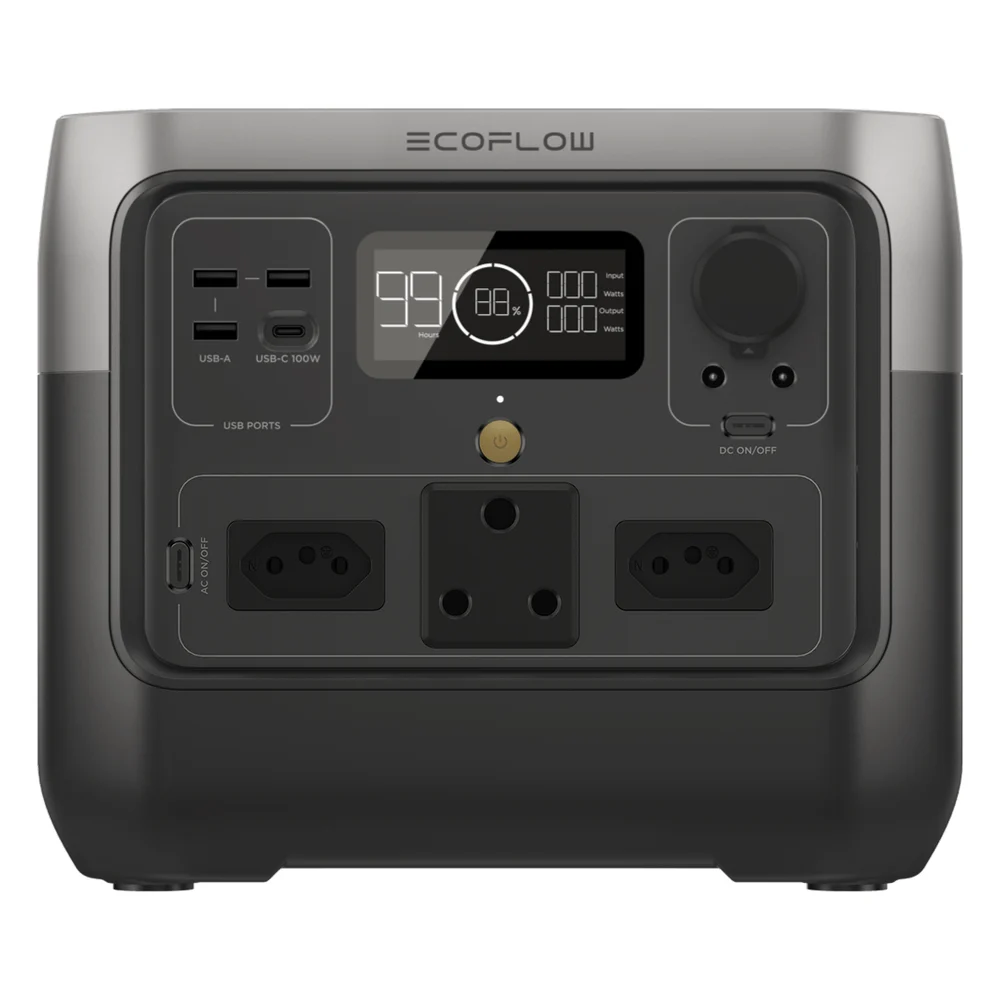
For the router, lights and TV through a daily cut, around 750Wh is enough. The EcoFlow RIVER 2 Pro is 768Wh and 800W, switches over in under 30 ms, and refills in 70 minutes. It is R9 899 at EcoFlow and at Takealot right now.
EcoFlow RIVER 2 Pro
Why this size
The EcoFlow RIVER 2 Pro is 768Wh and 800W, enough for a router, lights and a TV through a five-hour window, and refills in 70 minutes.
- Battery768Wh
- Output800W, 1 600W surge
- Recharge0 to 100% in 70 minutes
- Best forload reduction without the fridge
- Fridge limitits start-up surge has to fit under 1 600W, if you add one
you'll go to za.ecoflow.com
Where to buy itEcoFlow RIVER 2 Pro, compared across South African stores
-

EcoFlow South Africa
In stockR9 899R11 199Buy it at EcoFlowThe lowest price in stock
-
Takealot
In stockR9 899R16 399Buy it at TakealotThe lowest price in stock
Prices include VAT, read at each store on 17 Sep 2026. Stores change prices and stock often, so confirm at checkout.
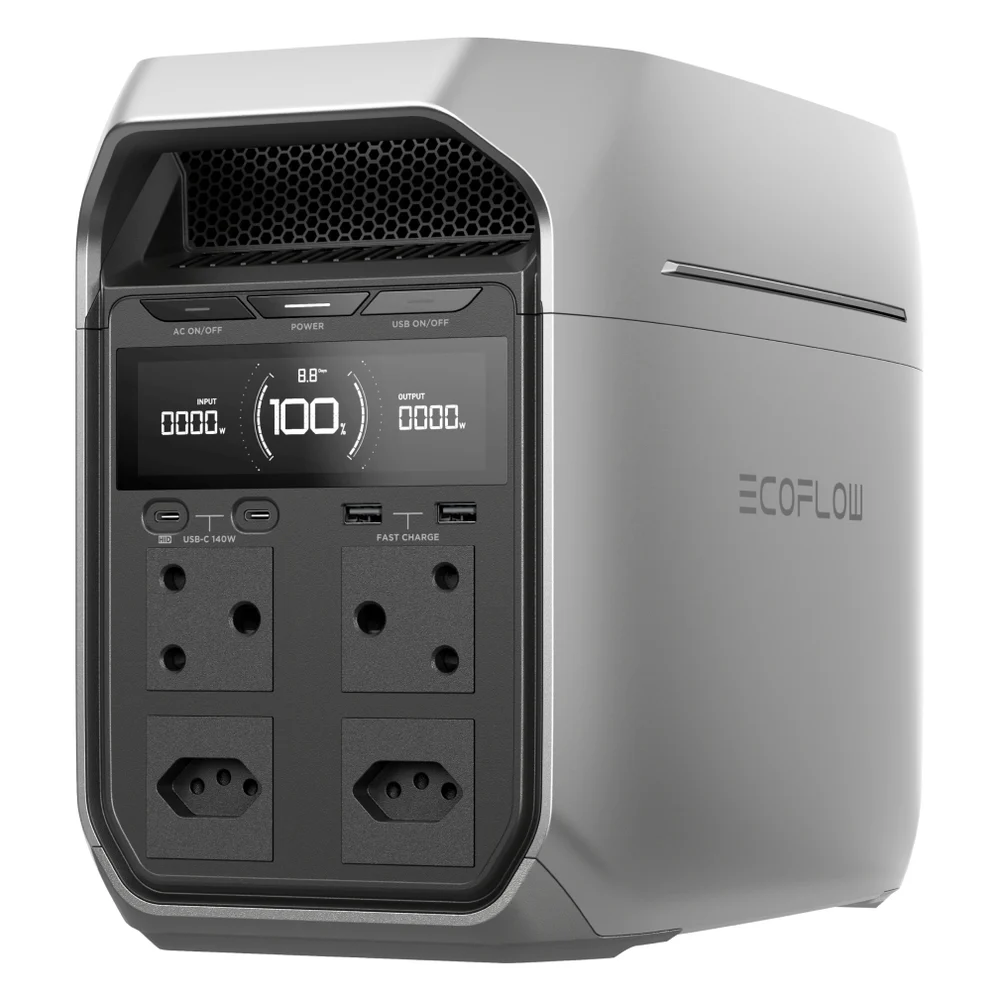
Now if you add the fridge, you want about 1kWh with real surge headroom. Then the EcoFlow DELTA 3 Plus is 1 024Wh with a 3 600W surge and an under-10 ms switchover, and it is R16 999 at Takealot, in stock, while EcoFlow's own store shows it sold out.
EcoFlow DELTA 3 Plus
Why this size
The EcoFlow DELTA 3 Plus pairs 1 024Wh with a 3 600W surge, the headroom a fridge needs to start, and switches over in under 10 ms.
- Battery1 024Wh
- Output1 800W, 3 600W surge
- SwitchoverUnder 10 ms
- Best forthe fridge, router and TV through an evening
- At checkout, checkwho is selling the listing, and the delivery date
you'll go to za.ecoflow.com
Where to buy itEcoFlow DELTA 3 Plus, compared across South African stores
-
Takealot
In stockR16 999R22 999Buy it at TakealotThe lowest price in stock
-
EcoFlow South Africa
Out of stock when checkedR16 999R18 999
Prices include VAT, read at each store on 17 Sep 2026. Stores change prices and stock often, so confirm at checkout.
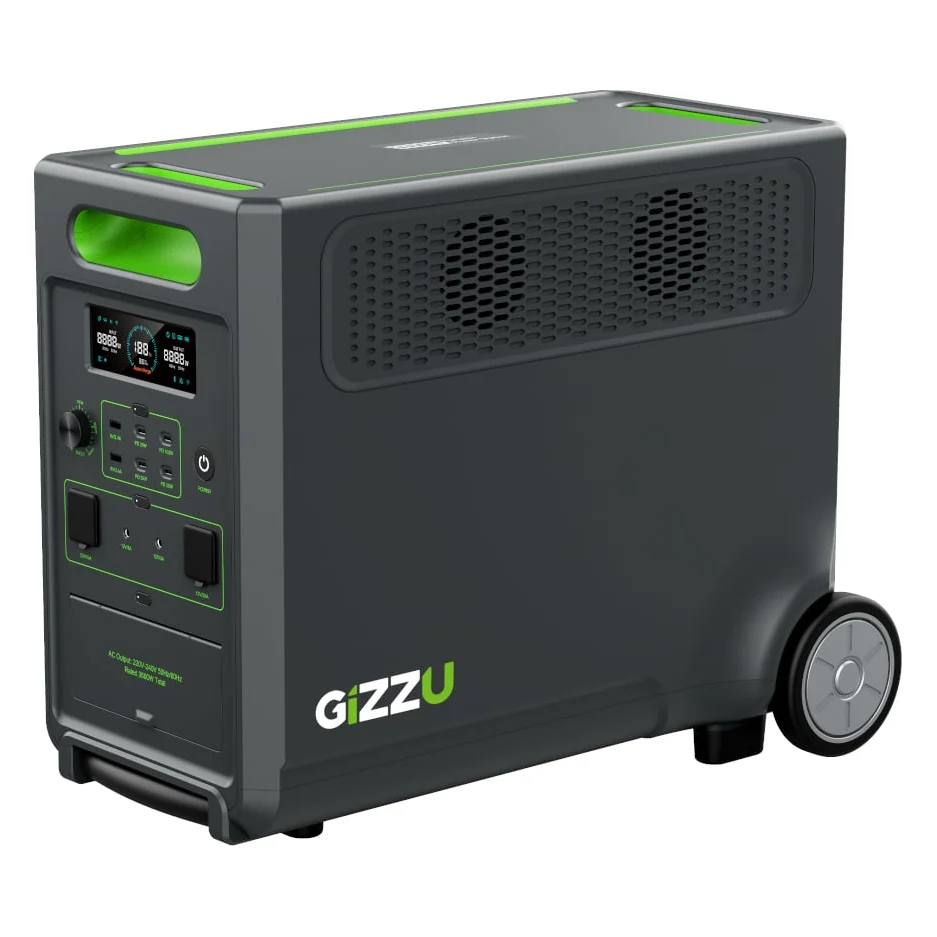
For a day or more without power, go big and plan the refill. The Gizzu Hero Ultra Plus stores 3 840Wh with a 7 200W peak, the most energy per rand we found, at R28 499 from Gizzu in stock. Pair any large unit with a solar panel sized to it, or it is only a longer countdown.
Gizzu Hero Ultra Plus 3840Wh
Why this size
The Gizzu Hero Ultra Plus 3840Wh stores the most energy per rand of the units we priced, with a 7 200W peak for heavy start-ups.
- Battery3 840Wh
- Output3 600W, 7 200W peak
- Warranty24 months
- Best fora municipal fault that runs into a second day
- At checkout, checkthe warranty on a marketplace listing, before you take a lower price
you'll go to www.gizzu.co.za
Where to buy itGizzu Hero Ultra Plus 3840Wh, compared across South African stores
-
Takealot
Ships laterListing states a 6-month warranty
Lowest today R28 093R35 678Buy it at TakealotR406 less than the brand's own store
-

Gizzu
In stockR28 499Buy it at GizzuThe longest warranty here: 2 years
Prices include VAT, read at each store on 17 Sep 2026. Stores change prices and stock often, so confirm at checkout.
The bottom line
Size the battery from your labels and your longest power cut, then let output and surge rule out the units that cannot do the job. For most homes that want the fridge covered, that lands on about 1kWh with at least a few thousand watts of surge.
If your power cuts come on a schedule, stop there. If it does not, spend the next rand on a panel rather than a bigger battery. And whichever size you land on, the ranked list shows every store selling it and what each one charges today.
EcoFlow DELTA 3 Plus
On the arithmetic above, this is the size most homes arrive at: 1 024Wh for an evening, 1 800W of output for the essentials together, a 3 600W surge for the fridge to start, and an under-10 ms switchover so the router never drops. R16 999 at Takealot on 17 September 2026. What it loses on: if your power cuts run past a day, 1kWh will not see you through, and a larger unit with a solar panel is the better spend.
Compare storesQuestions people actually ask
How do I work out what size power station I need?
Add up the watts on the rating labels of everything you want running at once, multiply by the hours of your longest power cut, and choose a battery comfortably bigger than that in watt-hours.Then check that the unit's continuous output is above your total watts and its surge rating covers a fridge starting.
How long will a 1000Wh power station run a fridge?
It depends on the fridge, and the simple division overstates it.A fridge cycles on and off (Eskom's home energy calculator assumes about 3 hours of use a day), while some battery energy is lost converting to mains power, and no maker on our list says how much. Check that the unit's surge rating covers the fridge starting.
What size power station do I need for load reduction?
Size it for your longest window, typically 17:00 to 22:00, five hours.A router, lights and TV fit a unit around 750Wh; add a fridge and aim for about 1kWh with a surge rating of a few thousand watts. It charges from a plug point between the cuts.
Does a bigger battery or a solar panel matter more?
For power cuts on a schedule, the battery, because it charges from a plug point in between.For a power cut with no end time, the panel, because nothing else will. EcoFlow says a DELTA 3 Max takes about 6.4 hours to charge from a 400W panel and about 11.6 hours from a 220W one.