Ranked
Best Backup Power for Your Home in South Africa (2026)
Power station, inverter trolley, installed solar or generator: which backup suits the power cuts you get, what each costs today, and what it needs.

Eskom suspended load shedding in May 2025, and most people buying backup power now are buying it for a different kind of power cut. For some it is load reduction, the same two windows every day, typically 05:00 to 09:00 and 17:00 to 22:00. For others it is a municipal fault with no end time. For a lot of households it is simply the electricity bill.
Those three problems need different things, which is why the question is not which brand to buy but which kind of backup. There are four, and I priced each one this week: a portable power station, an inverter trolley, installed solar, and a generator. This guide helps you pick the kind first, then points you at the one to buy.
For each kind I name one model, the one I would buy today from what its maker and the cheapest store say. That is my read of the market now, not a permanent verdict: when a better deal appears, it goes in, and I will say what changed.
Choose the kind before the brand
Four questions sort almost everyone into the right kind. Answer them in this order.
Can you wire anything in?
If you rent or live in a complex that will not allow it, your answer is something that plugs into a wall socket: a power station or a trolley. In the municipal guidance we read, those count as appliances, with nothing to register.
Does your power go off on a schedule?
A daily cut that ends means your battery charges from a plug point in between, so a battery is enough. A fault with no end time needs a way to refill without mains power: a panel, or fuel.
What must stay on, and must anything not restart?
A router and lights are a small load. A fridge needs surge headroom. A PC or router that must not drop needs a fast switchover, which power stations state and most trolley listings do not.
Is it the power cuts or the bill?
If what you really want is a lower electricity bill, only installed solar does that. Every other kind here only stores or makes power for when the grid is off.
Answer the four and you will usually be down to one kind. The sections below price the best buy in each.
The four kinds, side by side
Read across to the column that matches your power cuts.
What each kind of backup costs today, what it needs, and the power cuts it suits.
Home backup power in South Africa, compared
| Entry price today | Needs an electrician | Refills without mains | Best for | ||
|---|---|---|---|---|---|
| Portable power station | R5 099 (EcoFlow RIVER 2 Max) | No, it plugs in | Solar panel, on most | Renters, and a daily cut | See it |
| Inverter trolley | R3 999 (Navasolar 960Wh lithium) | No, it plugs in | Solar input, on some | The cheapest daily cover | See it |
| Installed solar | R1 470 a month (GoSolr S) | Yes, with a CoC and registration | Yes, every day | Lowering the bill | See it |
| Generator | R4 899 (Ryobi RG-1280i) | No, but never run it indoors | Yes, with fuel | Power cuts that last days | See it |
Prices read on 17 September 2026 at EcoFlow, Takealot and Gizzu; GoSolr on 11 September 2026. Installed solar also comes as a purchase; the cheapest battery-only kit with a listed price we found was R50 850 at Mzansi Solar.← scroll sideways on a narrow screen →
Only installed solar lowers your bill, and only a generator keeps going without sun or mains.
The other two are batteries, and the difference between them is warranty and portability, not what they store.
1. Portable power station - plug in and go
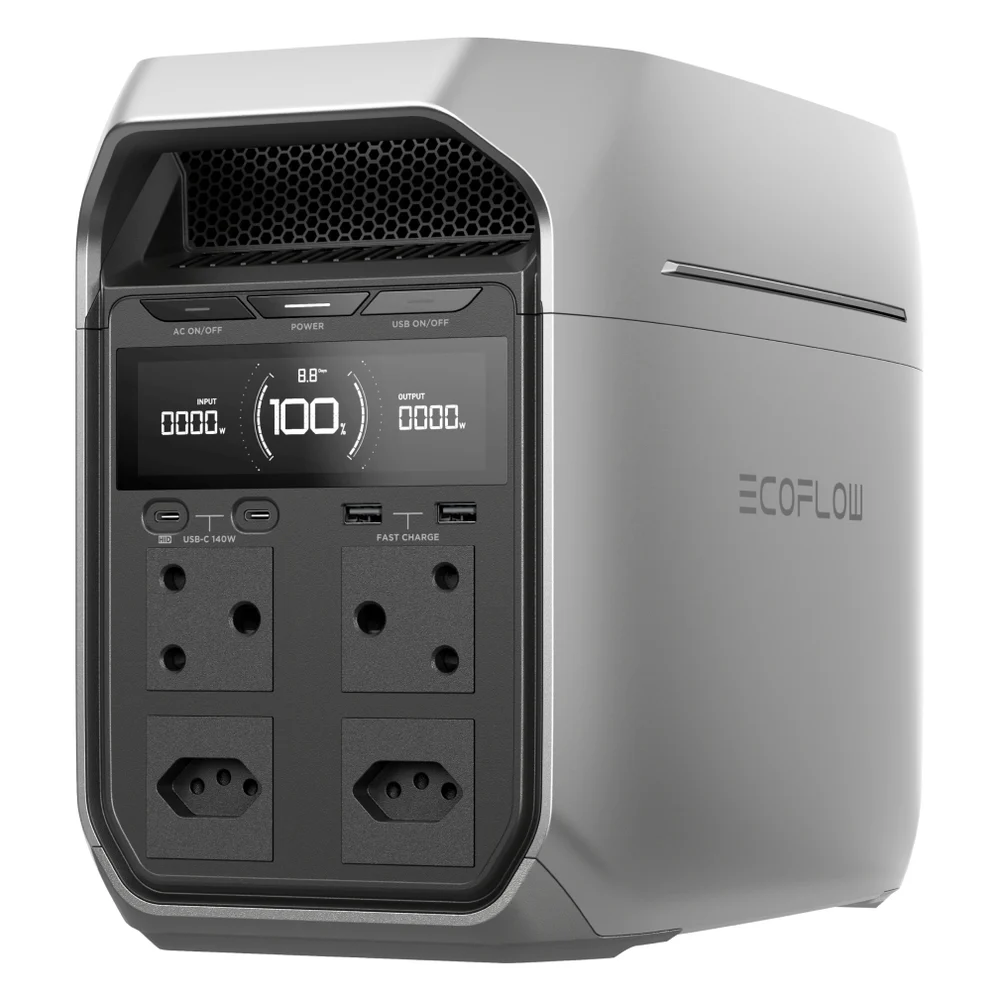
A power station is a battery and an inverter sealed in one box, and it is the only kind you can carry from the kitchen to a braai. Nothing is installed, so it moves house with you, and it is the one I would point a renter to first. The best buy for most homes right now is the EcoFlow DELTA 3 Plus, R16 999 at Takealot and in stock.
1Plug in, most homes
EcoFlow DELTA 3 Plus
Why it's on this list
The EcoFlow DELTA 3 Plus carries a fridge, router and TV through an evening, switches over in under 10 ms and has a five-year warranty.
- Battery1 024Wh
- Output1 800W, 3 600W surge
- Warranty5 years
- Best forrenters and homes on a daily cut
- At checkout, checkwho is selling the listing, and the delivery date
you'll go to za.ecoflow.com
Interactive · type your watts Will it run your home? Type your appliances' watts for this unit's runtime, or see smaller, cheaper and bigger picks R16.60per Wh stored
1Your appliances' watts
Type the watts printed on each rating label. Leave a row empty to skip it.
2On this unit
At most Add your watts
Type the watts for what you want to keep on.
A fridge or freezer draws a burst to start.
These on the list carry it:
- Gizzu Hero Pro 2048Wh2 400W · 2 048Wh · R17 999
- EcoFlow DELTA 3 Max2 400W · 2 048Wh · R20 799
- Gizzu Hero Ultra Plus 3840Wh3 600W · 3 840Wh · R28 499
The hours are this unit's 1 024Wh label divided by your watts. Some energy is lost turning the battery into mains power and the maker does not publish how much, so real runtime is shorter.
Too big or too dear? Consider instead
- EcoFlow DELTA 2R13 299at TakealotR3 700 less. The same 1 024Wh battery, and the same 1 800W output. Its maker publishes no switchover time, so a router or PC on it may restart when the power goes.
- EcoFlow RIVER 2 MaxR5 099at TakealotR11 900 less. 512Wh of battery against 1 024Wh, and 500W output against 1 800W. Its maker publishes no switchover time, so a router or PC on it may restart when the power goes.
- Jackery Explorer 500R6 998at TakealotR10 001 less. 518Wh of battery against 1 024Wh, and 500W output against 1 800W. Its maker publishes no switchover time, so a router or PC on it may restart when the power goes.
Too small? Step up to
- Gizzu Hero Pro 2048WhR17 999at TakealotR1 000 more for 2 048Wh, twice this battery, and 2 400W output.
- EcoFlow DELTA 3 MaxR20 799at TakealotR3 800 more for 2 048Wh, twice this battery, and 2 400W output.
Battery, output and surge are each maker's published figures; prices are the lowest in-stock offer we read, 17 Sep 2026. Worked from specs, not from our own tests.
Where to buy itEcoFlow DELTA 3 Plus, compared across South African stores
-
Takealot
In stockR16 999R22 999Buy it at TakealotThe lowest price in stock
-

EcoFlow South Africa
Out of stock when checkedR16 999R18 999
Prices include VAT, read at each store on 17 Sep 2026. Stores change prices and stock often, so confirm at checkout.
If your power cuts run past a day, go bigger rather than faster. The Gizzu Hero Ultra Plus stores 3 840Wh with a 7 200W peak, the most energy per rand of any power station I priced, at R28 499 from Gizzu. Pair it with a solar panel, or it only delays the problem.
2Long power cuts, no fuel
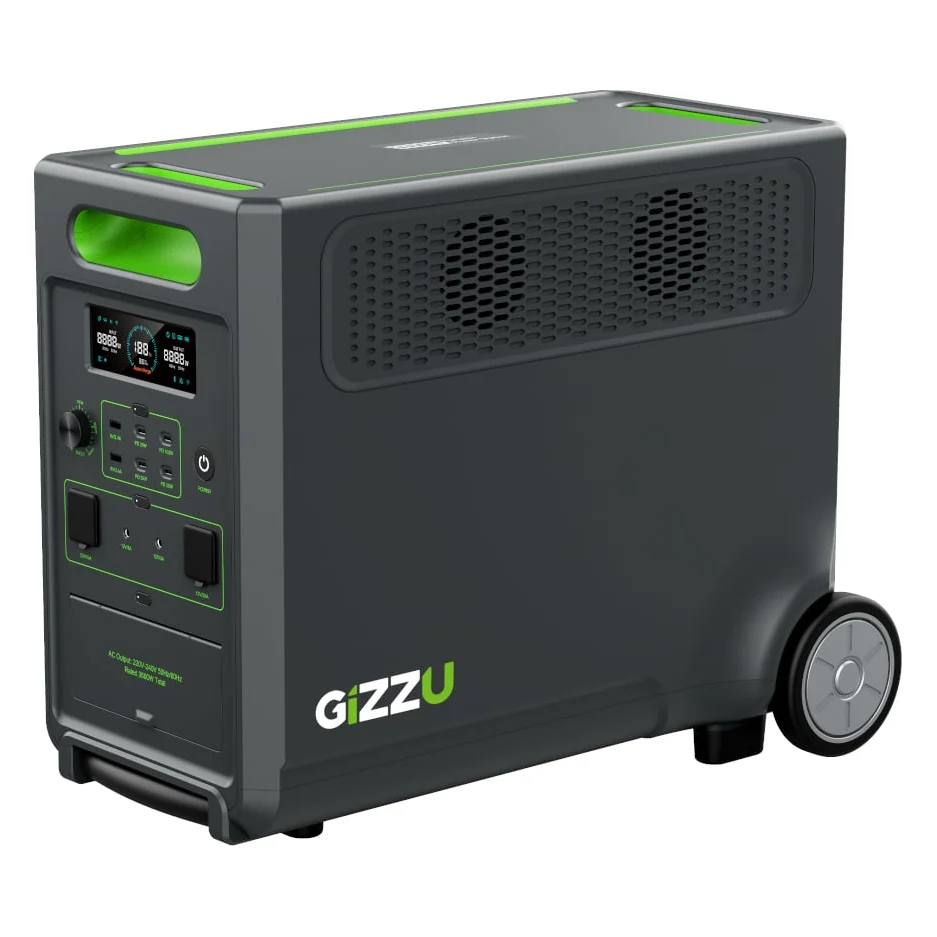
Gizzu Hero Ultra Plus 3840Wh
Why it's on this list
The Gizzu Hero Ultra Plus 3840Wh stores the most energy per rand of the power stations we priced, with a 7 200W peak for heavy start-ups.
- Battery3 840Wh
- Output3 600W, 7 200W peak
- Warranty24 months
- Best fora municipal fault that runs into a second day
- At checkout, checkthe warranty on a marketplace listing, before you take a lower price
you'll go to www.gizzu.co.za
Interactive · type your watts Will it run your home? Type your appliances' watts for this unit's runtime, or see cheaper picks R7.42per Wh stored
1Your appliances' watts
Type the watts printed on each rating label. Leave a row empty to skip it.
2On this unit
At most Add your watts
Type the watts for what you want to keep on.
A fridge or freezer draws a burst to start.
These on the list carry it:
The hours are this unit's 3 840Wh label divided by your watts. Some energy is lost turning the battery into mains power and the maker does not publish how much, so real runtime is shorter.
Too big or too dear? Consider instead
- Gizzu Hero Pro 2048WhR17 999at TakealotR10 500 less. 2 048Wh of battery against 3 840Wh, and 2 400W output against 3 600W. It switches over in 10 ms, which this one does not publish.
- EcoFlow DELTA 3 MaxR20 799at TakealotR7 700 less. 2 048Wh of battery against 3 840Wh, and 2 400W output against 3 600W. It switches over in under 10 ms, which this one does not publish.
Battery, output and surge are each maker's published figures; prices are the lowest in-stock offer we read, 17 Sep 2026. Worked from specs, not from our own tests.
Where to buy itGizzu Hero Ultra Plus 3840Wh, compared across South African stores
-
Takealot
Ships laterListing states a 6-month warranty
Lowest today R28 093R35 678Buy it at TakealotR406 less than the brand's own store
-

Gizzu
In stockR28 499Buy it at GizzuThe longest warranty here: 2 years
Prices include VAT, read at each store on 17 Sep 2026. Stores change prices and stock often, so confirm at checkout.
Best for: anyone who cannot or will not wire anything in, and homes on a daily cut that want a router and TV to stay on without a restart. Our ranking of nine power stations prices every model at every store, and the sizing guide tells you how big to go.
2. Inverter trolley - the cheapest daily cover
An inverter trolley is the same idea as a power station, on wheels and for much less. It plugs into a wall socket, so it needs no electrician either. The catch is what you are trusting: most trolleys on Takealot are sold by marketplace sellers, and the warranty on the listing ranges from six months to two years.
The battery type is the most important thing here, and it decides everything else. A lithium iron phosphate trolley states thousands of cycles. The cheapest trolleys still use a gel lead-acid battery, and the one I read gave no cycle rating at all. So for a cut that comes twice a day, that is the difference between a battery that lasts and one you replace.
Here are the four trolleys currently in stock on Takealot, with who sells each one and the warranty each listing states.
Inverter trolleys on sale in South Africa
| Battery | Cycles stated | Warranty on listing | Price | ||
|---|---|---|---|---|---|
| Mecer 1kW lithium | 1 280Wh lithium iron phosphate | 2 000 at 80% |
|
R7 499 | See it |
| Navasolar 1kW | 960Wh lithium iron phosphate | 4 000+ | 24 months | R3 999 | See it |
| Lalela 600W | 1 024Wh lithium iron phosphate | 3 500 at 80% |
|
R4 609 | See it |
| RCT MegaPower 1kW | 100Ah gel lead-acid | Not stated |
|
R3 199 | See it |
Read on each Takealot listing on 17 September 2026, not on the makers' own sites. Lalela's inverter is rated 1kVA but 600W; the watts are what it can run.← scroll sideways on a narrow screen →
The cheapest lithium trolley costs R800 more than the gel one and states more than 4 000 cycles.
For a daily cut, do not save R800 on the battery that has to last.
My pick is the Mecer, because Mecer is a long-standing South African brand, it holds the most battery of the four, and its built-in solar charger takes up to 840W of panels. The Navasolar is the better buy on paper, with the longest listed warranty and the most cycles for R3 999, but it is a brand I could not check beyond its listing, so check who is selling it before you order. Best for: a flat or a house on a daily cut, on a budget, where nothing needs to move.
3. Installed solar - the only kind that lowers the bill
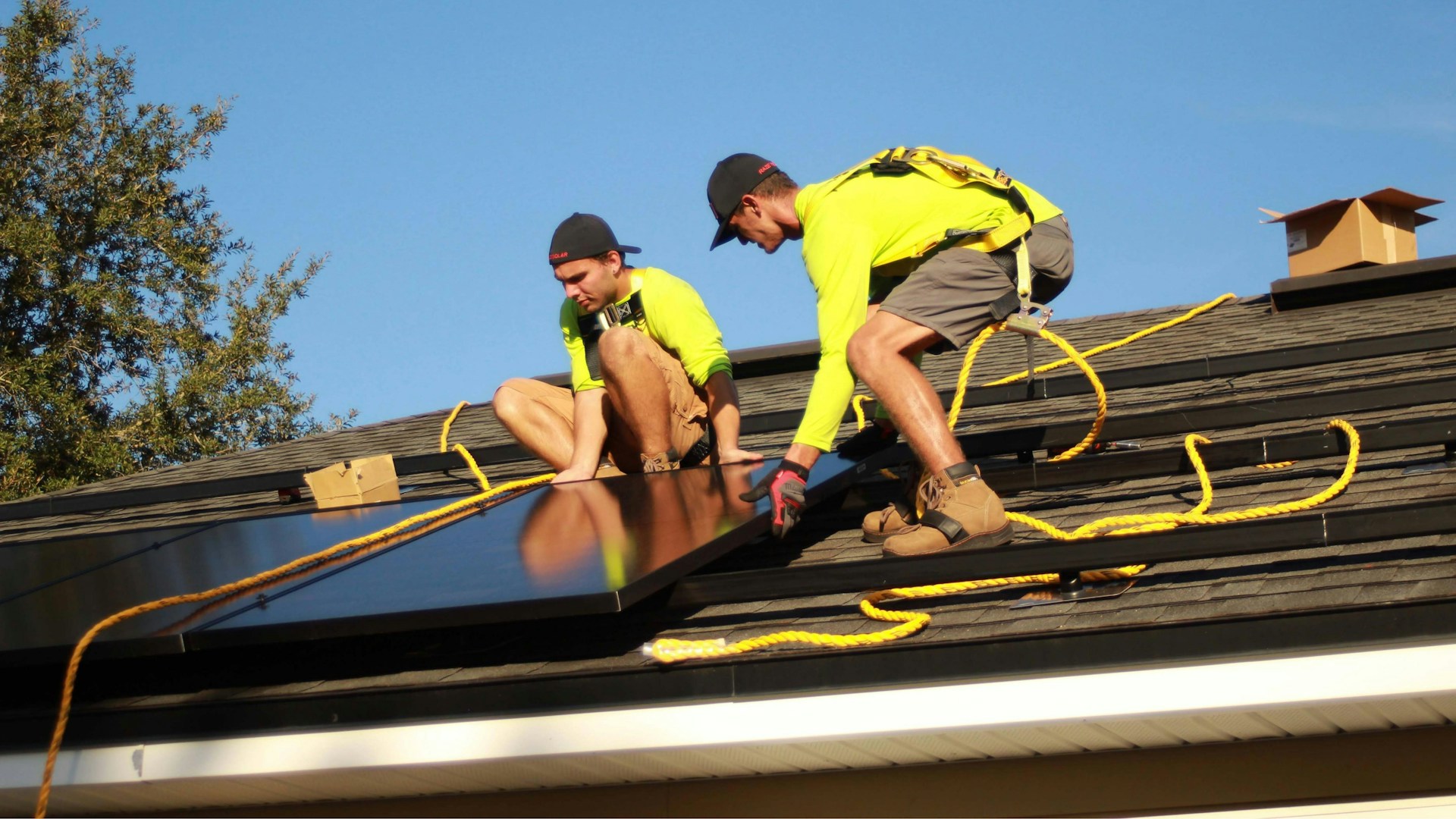
If the bill is the real problem, a power station or a trolley will not fix it. In this case, you need a properly installed solar system, with panels on the roof, a hybrid inverter and a battery on the wall, and it cuts what you buy from the grid every sunny day.
It is also the only kind here that needs paperwork: a Certificate of Compliance for the wiring and registration with your municipality, and that applies to a battery wired into your board even with no panels.
Installing solar can be expensive. In our ranking of seven South African solar companies, the smallest system with a price, Eezisol's 1.5 kW Starter Plan, comes to R31 800 paid off over a year, and the biggest kit with a listed price, Mzansi Solar's Gold kit with installation and the CoC included, is R158 224.
But the good news is that these days you do not have to pay for the whole installation at once. You can pay monthly instead, and our top pick for that is GoSolr: its entry plan is R1 470 a month including VAT, and its once-off fee, equal to one month, covers the installation, the CoC and the municipal registration.
3Lower the bill
GoSolr S

Where they installin South Africa
3of 9 provinces
Gauteng, Western Cape, and KwaZulu-Natal
Offices in Johannesburg, Cape Town and Durban.
Checked 16 Sep 2026
Why it's on this list
GoSolr S is installed solar with no upfront cost beyond one month, and the fee covers the CoC and the municipal registration.
- ContractMonth to month
- PaperworkCoC and registration in the once-off fee
- Best forlowering the bill with no capital
- The trade-offyou never own the system
All 8 GoSolr plans Eight sizes, matched to your monthly electricity bill fromR1 470a month
- SBills under R2 500 a monthR1 470a month
- MBills of R2 500 to R6 000R2 558a month
- LBills over R6 000R3 349a month
- L, 3-phase3-phase homes with bills over R6 000R3 499a month
- XLBills over R8 000R4 336a month
- XL, 3-phase3-phase homesR4 486a month
- 2XL, 3-phase3-phase properties with bills over R12 000R6 972a month
- 3XL, 3-phase3-phase properties with bills over R20 000R10 481a month
Prices include VAT. Every plan adds a once-off admin fee equal to one month. An extra battery is R490 and an EV charger R274. · Checked 16 Sep 2026
Want a quote from GoSolr?
We send your details straight to GoSolr's team and follow up for you, so your quote does not sit in a queue.
If you would rather end up owning the system, the second-best option is Alumo Energy's rent-to-own, from R1 418 a month over up to seven years, with the option to buy it out at any time.
Alumo Energy rent-to-own

Where they installin South Africa
Nationwide
All 9 provinces
Offices in Pretoria, Vanderbijlpark and Middelburg.
Checked 16 Sep 2026
Why it's on this list
The lowest monthly way into a system you can buy out, from R1 418 a month, with insurance and maintenance included.
- SystemSolis 5 kW inverter, 5.3 kWh battery, 3 panels
- IncludedInsurance and free annual maintenance
- Best forowning a system without the cash upfront
- Check in your quotethe price of a larger system: three panels is a small array
All 2 Alumo Energy plans Two ways to pay monthly: rent to own, or a subscription fromR1 299a month
Rent to own
From R1 418a month
What you get
- Solis 5 kW
- 5.3 kWh battery
- 3 panels
Terms
- R700 initiation fee
- 3, 5 or 7 years, with the option to own
Subscription
From R1 299a month
What you get
- Solis 5 kW
- 5.32 kWh battery
- 4 panels
Terms
- R1 299 initiation fee
- Cancel after 24 months
Every plan includes free annual maintenance and an upgrade at any time.Where to start Rent to own if you want the system to be yours in the end. Take the subscription if you'd rather never own it and like being able to cancel after 24 months.
Checked 16 Sep 2026
Want a quote from Alumo Energy?
We send your details straight to Alumo Energy's team and follow up for you, so your quote does not sit in a queue.
If you would rather pay for it all upfront, the cheapest battery-only kit with a listed price I found was Mzansi Solar's at R50 850, and GreenHouse Solar sells a backup-only package from R54 200. One thing to ignore: the solar tax rebate you may have heard about ran from March 2023 to February 2024 and was not renewed. Best for: homeowners who want the bill down, not just the lights on.
4. Generator - for days without power
A generator is the only kind that keeps going as long as you keep feeding it, which makes it the answer for a power cut that runs for days with no sun. An inverter generator gives cleaner power for electronics than an old open-frame one. What you give up is quiet and convenience: it runs on petrol, it is loud, and it must never run indoors or in a garage, because the exhaust can kill.
Three Ryobi inverter generators in stock on Takealot, as their listings describe them.
Inverter generators on sale in South Africa
| Output | What the listing states | Warranty on listing | Price | ||
|---|---|---|---|---|---|
| Ryobi RG-1280i | 1 000W running, 1 200W max |
|
24 months | R4 899 | See it |
| Ryobi RG-2200i | 2 200W | 3.5L tank with auto-idle | 24 months | R8 899 | See it |
| Ryobi RG-3000i | 3 000W | Not read | Not read | R10 519 | See it |
Read on Takealot on 17 September 2026. Fuel use depends on load, so the runtime is the listing's own figure, not ours.← scroll sideways on a narrow screen →
About R4 900 buys enough for lights, a router and a TV; about R8 900 adds a fridge.
Run it outside, and plan for the petrol.
My pick is the Ryobi RG-2200i at R8 899, big enough for a fridge with the essentials and small enough to carry. Many households pair a generator with a battery: the battery covers the short cuts silently, and the generator only comes out when a power cut runs into a second day. Best for: a house that loses power for days at a time, with a yard to run it in.
What you do not need to register
The line is the wiring, not the technology. In the municipal guidance I read, a power station or trolley that only charges from a wall socket is treated as an electrical appliance, with nothing to register. The moment a battery system is wired into your distribution board it counts as small-scale embedded generation, even with no panels, and it needs a registered electrician's Certificate of Compliance and your municipality's approval. The rules, fees and penalties are set by each municipality, so check yours before an installer starts.
The bottom line
Match the kind to the power cuts. A daily cut is a battery job, and a lithium trolley is the cheapest way to cover it while a power station is the easiest. A power cut that runs for days is a generator job, or a big battery with a panel. A high bill is a solar job, and nothing else on this page will lower it.
For most homes reading this, and every renter, I would start with a plug-in power station, because it needs no installer, moves with you and covers the power cuts most people get now.
Renters, and homes on a daily cut that want the router, TV and fridge covered with nothing to install.
EcoFlow DELTA 3 Plus
R16999once-off, sold out at EcoFlow on 17 Sep 2026, in stock at Takealot
R16 999 at Takealot, in stock and sold by EcoFlow (checked 17 September 2026)
See the lane Price checked 17 Sep 2026Still not sure which kind? Answer the four questions below for your own home, and you get the kind that fits with the one to buy.
Four questions
Which kind of backup fits your home?
Answer for your own home. The recommendation updates as you go.
1Can you install anything, or do you rent?
2How does your power go off?
3Does it need to move, or stay in one place?
4What can you spend upfront?
Before you answer
A plug-in power station, for most homes
It needs no installer, moves with you and covers the power cuts most people get now, from about R5 000.
The trade-off: an inverter trolley costs less for the same battery, with a shorter listed warranty and nothing portable about it.
Prices read at each store on 17 September 2026, solar on 11 September 2026. The kind is chosen on the power cuts you get and whether you can install anything.
Questions people actually ask
What is the best backup power for a home in South Africa?
It depends on the power cuts.For a daily cut or a rented home, a plug-in power station such as the EcoFlow DELTA 3 Plus (R16 999 at Takealot on 17 September 2026) or a lithium inverter trolley from about R4 000. For power cuts lasting days, a generator. To lower the bill, installed solar.
Is an inverter trolley or a power station better?
A lithium inverter trolley stores similar energy for much less money, from R3 999 on 17 September 2026, but most are sold by marketplace sellers with listed warranties of six months to two years.A power station costs more, is portable, and the major brands state their switchover times and give longer warranties.
Do I need to register an inverter or battery with the municipality?
Only if it is wired into your distribution board.In the municipal guidance we read, a unit that charges from a wall socket is an appliance, while a battery system wired into the board counts as small-scale embedded generation even without panels. Rules differ by municipality.
Is load shedding still happening in South Africa?
Eskom suspended load shedding in May 2025.Some areas still have load reduction, typically 05:00 to 09:00 and 17:00 to 22:00, and municipal faults cause unscheduled power cuts.
Can I still claim a tax rebate for solar?
No. The individual solar rebate under section 6C covered solar panels only, from 1 March 2023 to 29 February 2024, and was not renewed.It never covered batteries or inverters.